

On 23 April 2026, South African President Cyril Ramaphosa delivered a nationally televised address pertaining to a deepening crisis within the South African Police Service (SAPS), announcing decisive action against its top leadership while igniting fresh political controversy over his choice of interim replacement.
The president confirmed that National Police Commissioner Fannie Masemola had been placed on immediate precautionary suspension following his implication in an allegedly irregular procurement deal worth hundreds of millions of rand. Ramaphosa stressed that the move was not a finding of guilt, but a safeguard to ensure that investigations proceed without interference and to protect the credibility of the police service.
He said the decision was necessary to uphold accountability and maintain the integrity of SAPS, amid what he described as broader concerns about corruption and possible criminal infiltration within law enforcement. According to Ramaphosa, such challenges threaten public trust and undermine the justice system. He reassured the nation that policing operations would continue uninterrupted and that stability within SAPS remained a priority.
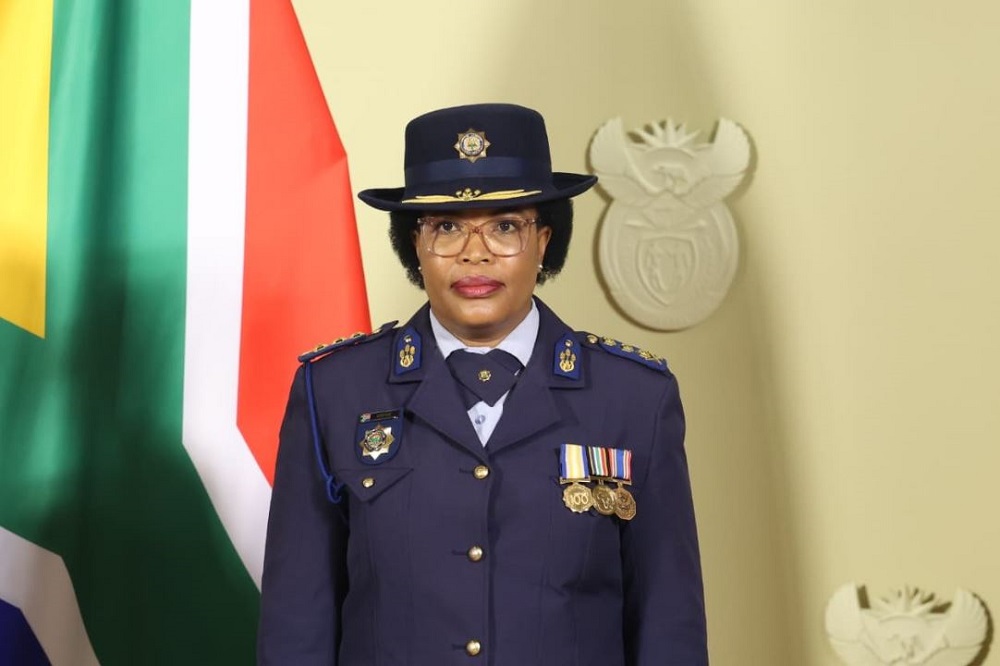
In Masemola’s place, Ramaphosa appointed Puleng Dimpane as acting national commissioner, expressing confidence that she would provide “effective leadership” during a turbulent period. However, the appointment has triggered strong reactions from opposition parties and oversight figures, raising questions about her suitability.
The MK Party was among the first to voice concern, arguing that the position should be held by a career police professional rather than someone with a financial background. Party spokesperson Nhlamulo Ndhlela criticized the decision, stating “What’s concerning here is that the president has now reduced the problem and the inherent problem of crime in this country to just mere finance and the PFMA.” He added that Dimpane lacks training in critical areas such as counterintelligence and crime intelligence, which are central to effective policing.
Similar concerns were raised by ActionSA. Member of Parliament Dereleen James alleged that Dimpane had been closely involved with Masemola during the period under scrutiny. “This General worked hand in glove with the National Police Commissioner and you know, when the National Police Commissioner was in the dock, I strongly believe that she should have been there right next to him answering questions,” she said. James further claimed that Dimpane was “part and parcel” of processes that directed questionable tenders, adding that ordinary South Africans remain vulnerable amid ongoing instability.
Meanwhile, Ian Cameron, Chairperson of Parliament’s Police Portfolio Committee, acknowledged the difficulty of the situation facing the incoming acting commissioner. He noted that ongoing investigations have left much of SAPS leadership under a cloud of suspicion. “The amount of investigations that are ongoing really puts her in a very tough spot about getting trusted individuals and placing them around her,” Cameron said, emphasizing the importance of appointing credible leaders to restore confidence in the institution.
Ramaphosa used the address to reiterate his administration’s broader commitment to combating corruption, insisting that no individual is above the law regardless of rank or position. He framed the suspension of Masemola as part of a wider effort to restore integrity in public institutions and rebuild trust in the country’s law enforcement agencies.
The developments mark a critical moment for SAPS, as the government attempts to confront allegations of high-level corruption while managing political fallout over leadership decisions. With investigations ongoing and public scrutiny intensifying, the effectiveness of Dimpane’s interim leadership may prove pivotal in determining whether confidence in the police service can be restored.