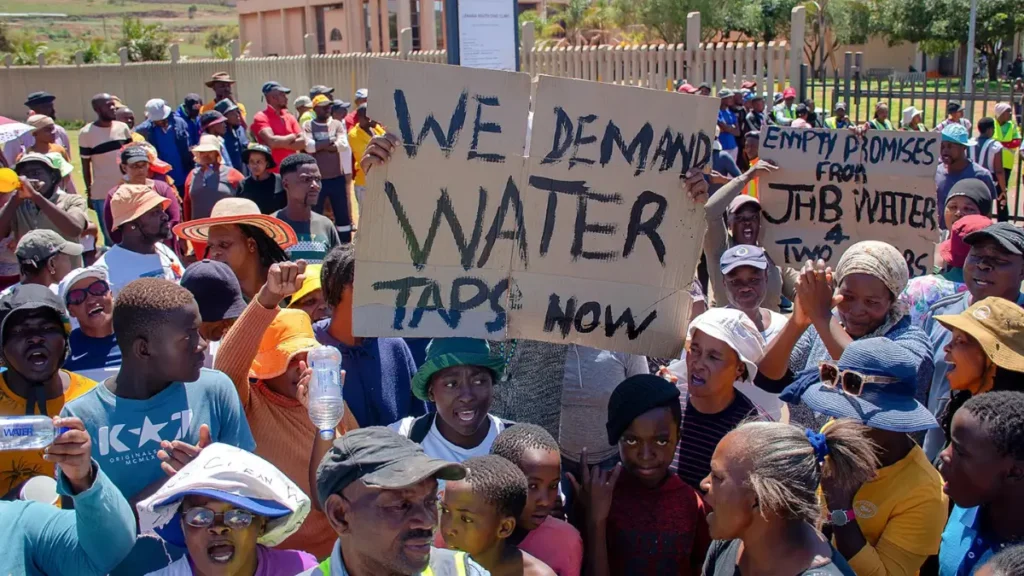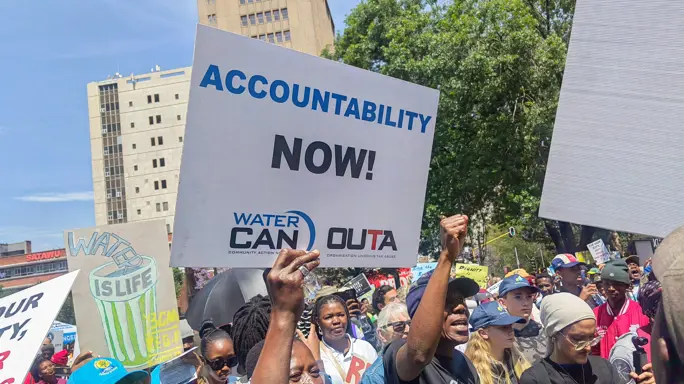


Residents of Melville, Westdene and surrounding suburbs have taken to the streets, fed up with Johannesburg’s deepening water crisis. Prolonged outages lasting weeks have left homes and businesses without reliable supply, turning frustration into organised protest.
In Melville, residents report going more than 16 days without water. Municipal communication has been described as inconsistent, while water tankers have failed to meet basic household needs. Protesters gathered to demand accountability from Johannesburg Water and city authorities, condemning what they call empty promises and a lack of transparency.
Earlier in the week, Johannesburg Water spokesperson Nondumiso Mabuza acknowledged operational strain within the entity. “A significant portion of our workforce is currently engaged in unprotected industrial action, which negatively impacts service delivery. We are trying to deploy contractors to assist with queries while we work with unions to resolve these issues” she said.
The protests, which also spread to Westdene, underscored the human cost of the crisis. Families are relying on communal water points and bottled supplies, while local businesses struggle to remain operational. Restaurants and cafés have been forced to limit services or close temporarily due to the unreliable water supply.
At a media briefing, Johannesburg Mayor Dada Morero conceded the severity of the situation but defended the city’s response. “We are working around the clock to address these interruptions. Localised pressure management and staged restores are necessary to protect reservoirs and maintain broader supply across the city. Residents must reduce water consumption to help the system recover” he said.
While city officials point to technical and labour challenges, residents argue that the crisis exposes deeper systemic weaknesses, including aging infrastructure and inadequate contingency planning. With patience wearing thin, demonstrators say the protests mark a shift from quiet endurance to visible resistance.
The message from affected communities is clear: the water crisis can no longer be normalised.