

Panyaza Lesufi struck a candid and at times sombre tone as he delivered the 2026 State of the Province Address at the Nasrec Expo Centre on Monday night, acknowledging mounting service delivery failures while outlining an ambitious infrastructure recovery plan.
“We are sorry,” the Premier said plainly, addressing residents frustrated by ongoing water disruptions and infrastructure breakdowns.
“It remains an honour to lead and be the face of this province of ours. Where I erred or misrepresented our province, I sincerely and honestly apologise,” Lesufi told the legislature, invoking an African proverb about mistakes belonging to those who work.
Water supply instability dominated much of the address. Lesufi announced a R760 million phased infrastructure upgrade aimed at stabilising supply in Johannesburg. According to the Premier, the issue is not water scarcity but ageing and overburdened infrastructure.
“The challenge is not water availability, but the interruptions caused by infrastructure failures, leaks and high-demand peaks,” he said.
The plan includes the construction of a new ground reservoir and water tower in Brixton, an emergency boosting pumping station, and a critical five-kilometre pipeline scheduled for completion by year-end.
Lesufi also referenced the 27 January explosion at a Rand Water plant that damaged key transmission equipment and triggered widespread disruptions.
“We then went into emergency mode,” he said.
Beyond the immediate crisis, the Premier announced the establishment of a centralised bulk infrastructure agency to coordinate water, electricity and sanitation projects across Gauteng municipalities. He framed the move as essential to protecting economic stability and investor confidence.
“If we can’t make water, electricity and sanitation available immediately to investors, investors will leave us,” Lesufi warned.
Public reaction to the address was divided. Some residents welcomed the apology as rare and long overdue.
“We just want consistency,” one Gauteng resident wrote on social media, reflecting weeks of frustration over unreliable services.
Others questioned why large-scale infrastructure investment is only now being prioritised, describing the measures as overdue. In Soweto, concerns extended beyond infrastructure. A young resident told reporters unemployment remains the province’s most urgent crisis.
“The most important element that we are really pleading for this government to do is the issue of unemployment,” he said, linking joblessness to rising social pressures.
Opposition parties were more direct in their criticism. Funzi Ngobeni, ActionSA’s provincial chairperson, said the address failed to provide measurable accountability.
“If businesses are still struggling with unreliable water… it’s fair to ask whether the fundamentals are really in place,” Ngobeni said.
Other opposition figures described the speech as “an old story reworked with new topics” and accused the Premier of being “economical with the truth,” particularly regarding crime-fighting initiatives and infrastructure promises.
Despite the criticism, Lesufi highlighted progress in road maintenance, pothole repairs, digital healthcare initiatives and new investment deals aimed at job creation. Whether the apology signals a turning point or becomes another unmet promise will depend on implementation.
For Gauteng residents, the coming months will not be measured in speeches, but in water pressure, working taps and tangible improvements in daily life.
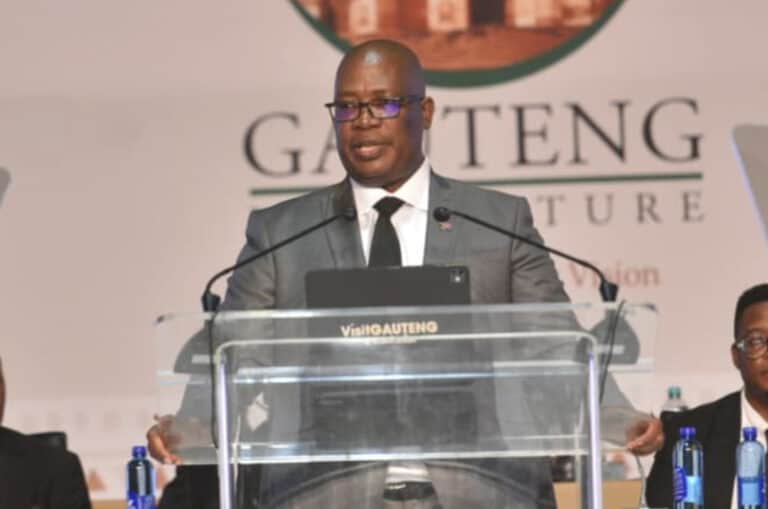
Picture: Nigel Sibanda