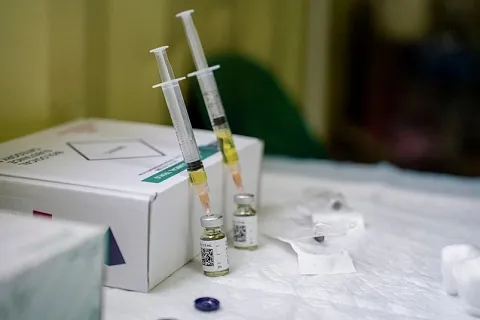


South Africa has taken a major step forward in the fight against HIV with the arrival of the groundbreaking prevention drug, Lenacapavir, which has been hailed by the South African National AIDS Council as a potential turning point in reducing new infections. The first batch of 37,920 doses of the twice-yearly injectable recently arrived in the country and will form part of the government’s broader HIV prevention strategy aimed at curbing the spread of the virus, particularly among high-risk populations.
The rollout will be led by the National Department of Health in collaboration with SANAC and other stakeholders, with an official launch expected to be announced in the coming weeks by Health Minister Aaron Motsoaledi in consultation with the President. According to government spokesperson Foster Mohale, the introduction of lenacapavir forms part of an “integrated, differentiated and people-centred HIV prevention” approach that seeks to expand prevention choices and improve adherence among vulnerable groups.
Lenacapavir is administered as an injection every six months to HIV-negative individuals, making it one of the most effective pre-exposure prophylaxis (PrEP) options currently available. Its long-acting nature is expected to address challenges associated with daily medication adherence, offering a more practical solution for many people. This is particularly significant in South Africa, which continues to record approximately 180,000 new HIV infections each year, underscoring the urgent need for more effective prevention tools.
SANAC’s Health Products Grant Specialist, Gertrude Mngola, expressed optimism about the drug’s impact, noting its near-perfect efficacy and potential to significantly reduce infection rates. She highlighted that the convenience of a twice-yearly injection could improve uptake and consistency among users, ultimately strengthening prevention efforts across the country. “We foresee that it is going to reduce the infection rate. The efficacy of the injection is near perfect, almost 100%. We know we’re not going to rely on you coming every day. So once you get the injection, you’re protected for six months, and so it is going to decrease the infection rate.”
Mohale emphasized that the newly arrived doses will support South Africa’s long-term goal of ending AIDS as a public health threat by 2030 and sustaining the HIV response beyond that period in line with global targets. He also clarified the nature of the drug, stressing that it is not a vaccine but a preventive treatment that represents one of the most promising advances in HIV prevention in recent years. “Lenacapavir will boost the country’s efforts to reduce new HIV infections, end AIDS as a public health threat by 2030, and sustain the HIV response beyond 2030. Lenacapavir is preventive medicine, not a vaccine, and is considered one of the most exciting HIV prevention advances in years,” he stated.
In addition to supporting the rollout, SANAC is advocating for the local manufacturing of lenacapavir to ensure long-term affordability and sustainability. The council has indicated that it is actively engaging with key stakeholders to explore licensing and access pathways that would enable domestic production, a move expected to strengthen South Africa’s capacity to respond to HIV more effectively and ensure wider access to this life-changing prevention method.